
Buying Guide
How to Choose a Tactical Mask for Airsoft in Canada
Nov
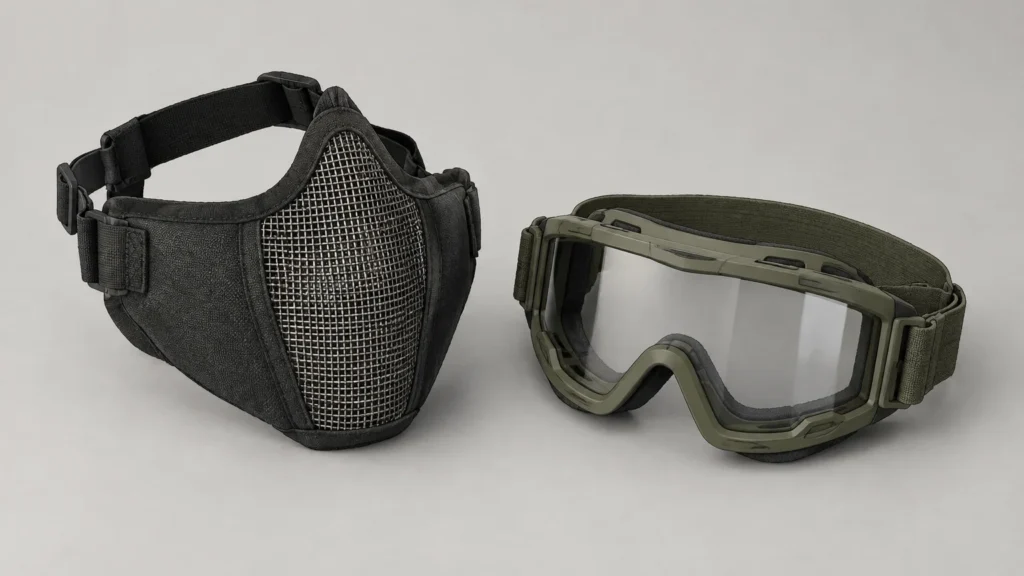
Summary: A tactical mask should protect the parts of your face that need coverage without interfering with properly rated, full-seal eye protection. Choose based on coverage, fit, materials, and how the mask works with your goggles, helmet, and rifle. In Canada, check your field’s requirements before buying or playing.
If you need a tactical mask, first decide whether you want lower-face coverage, full-face coverage, or protection for a specific area. A mask does not automatically protect your eyes. Compare its fit with your goggles and consult our airsoft eye and face protection guide before choosing a style.
For airsoft, your setup needs to do more than cover skin: it should stay in place when you move and allow you to aim and communicate. The right combination depends on the mask’s construction and your other equipment. If you play in Canada, check your field’s rules as part of your selection.
What should an airsoft tactical mask cover?
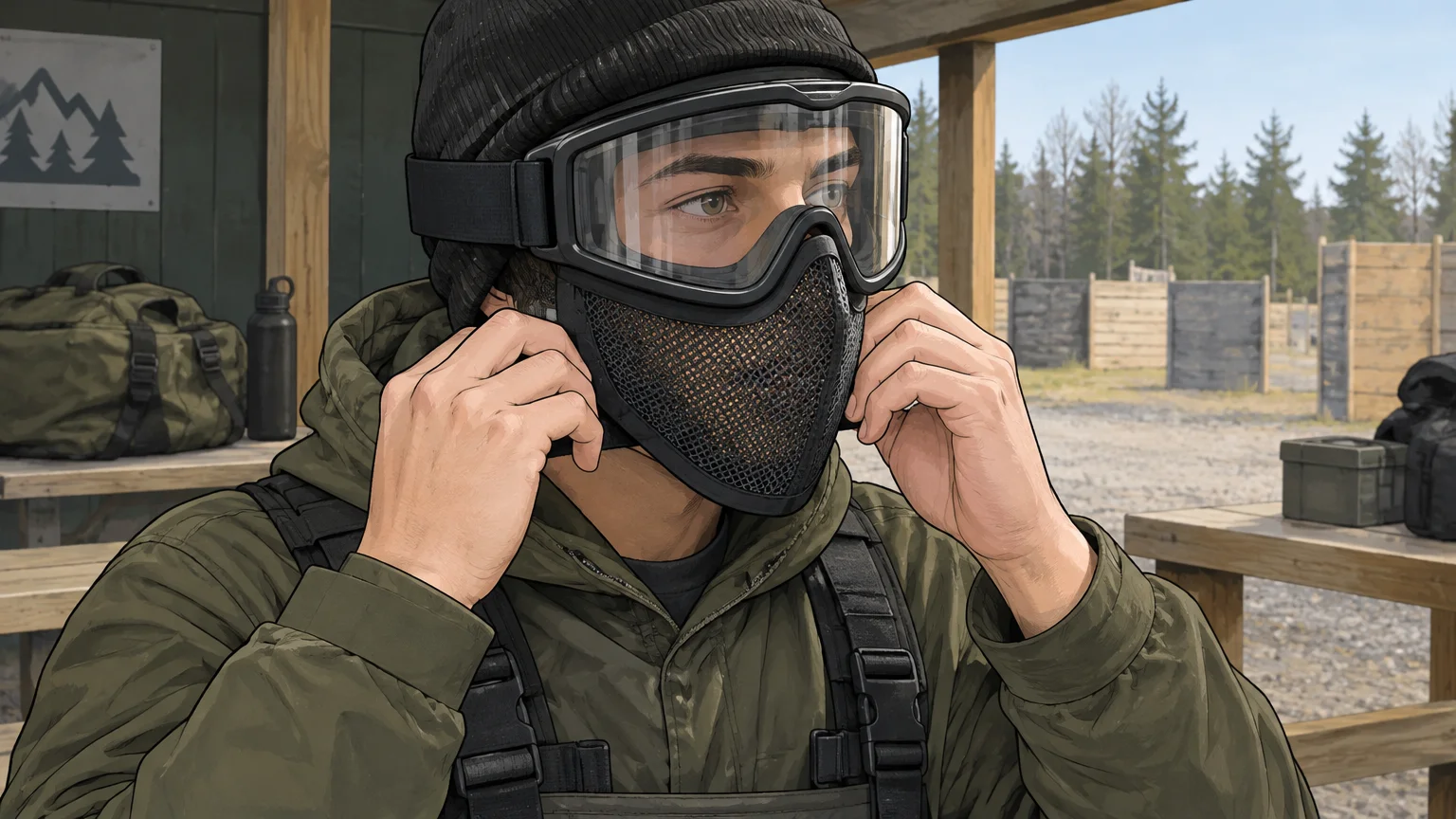
A lower-face mask generally covers the mouth, nose, and sometimes the cheeks. It can reduce exposure to BB impacts on those areas, but it is not a substitute for eye protection. A full-face design may cover more of the face, yet its eye area still needs suitable, secure protection.
Consider what you need to protect and how much bulk you can comfortably wear. A design that leaves the cheeks clear can make shouldering a rifle easier, while broader coverage can feel more enclosed. A balaclava-style hood with an integrated steel mesh nose and mouth guard is one option; our Matrix Shadow Fighter airsoft mask combines that kind of guard with a lightweight hood.
Why should eye protection be chosen separately?
Your eyes need their own reliable protection, even when a mask covers the rest of your face. The Canadian Ophthalmological Society recommends CSA-approved eye protection for people within firing range of nonpowder projectile weapons, including airsoft. Check that the specific eyewear is suitable for airsoft and accepted by your field, rather than assuming any goggles will qualify. The Society’s guidance also stresses wearing eye protection whenever you are within range.
Do not treat mesh over the eyes as a replacement for appropriate goggles. A 2022 case report documented an eye injury after a plastic BB fragment passed through a steel mesh eye shield marketed for airsoft. This is a single case, not a comparison of eyewear, but it is a practical reason to use appropriate protective eyewear rather than relying on mesh eye coverage. The published case report describes the incident.
Look for full-seal eye protection that fits securely and does not leave obvious gaps around the eyes. Wear it as intended throughout play. A lower-face guard should sit comfortably beneath or alongside your goggles without pushing them away from your face.
How do coverage and construction affect comfort?
Materials influence how a face mask feels, how much air moves around your face, and how the guard sits against your cheeks. Mesh permits airflow through its openings, while fabric and other solid sections change how enclosed the fit feels. Inspect the mask’s construction and follow its product-specific instructions; do not assume that similar-looking masks offer the same protection.
For lower-face coverage, our mesh tactical face guard has breathable polyester, a rubber nose and mouth guard, and an adjustable backstrap. It covers the lower face, not the eyes, so pair it with suitable eyewear. If you prefer a helmet-style design, our mesh trooper mask with helmet is described with a fiberglass construction and wire mesh; the product information calls for goggles or glasses beneath it.
Think about ventilation, speech, and maintenance as well as coverage. A guard that muffles your voice or traps heat may be uncomfortable during a long session. Check how it fastens, whether it can shift during movement, and how to clean it after use.
How can you check fit with goggles and other gear?
Try the mask with the exact goggles, helmet, and headwear you plan to use. Check that straps do not interfere with one another and that the mask does not lift the goggles or break their seal. ASTM’s F2879-22 specification addresses eye protective devices for airsoft sports; it is a reference for eyewear, not proof that a lower-face mask meets a particular protective standard.
Move your head, speak, and shoulder your rifle while wearing the full setup. Check that the mask stays in place and that your cheek can reach the stock without shifting your goggles. If you wear prescription glasses, test the complete arrangement for comfort and a secure goggle fit before taking it onto the field.
Do not judge protection by appearance alone. Review the product’s stated coverage and any protective information, then ask the field whether the setup meets its rules. If the field cannot confirm that a mask and eyewear combination is acceptable, get clarification before playing.
What should you check before using a mask in Canada?
Field requirements are an important part of choosing airsoft face protection. Ask about accepted eye protection, lower-face coverage, and any requirements for specific player groups. A mask that fits your face may still be unsuitable if it does not meet the site’s rules.
Inspect the mask, straps, and protective eyewear before each session. Replace or stop using any item that is cracked, loose, distorted, or otherwise damaged. Follow the manufacturer’s cleaning and storage instructions, and avoid modifying protective equipment in ways that could affect its fit or construction.
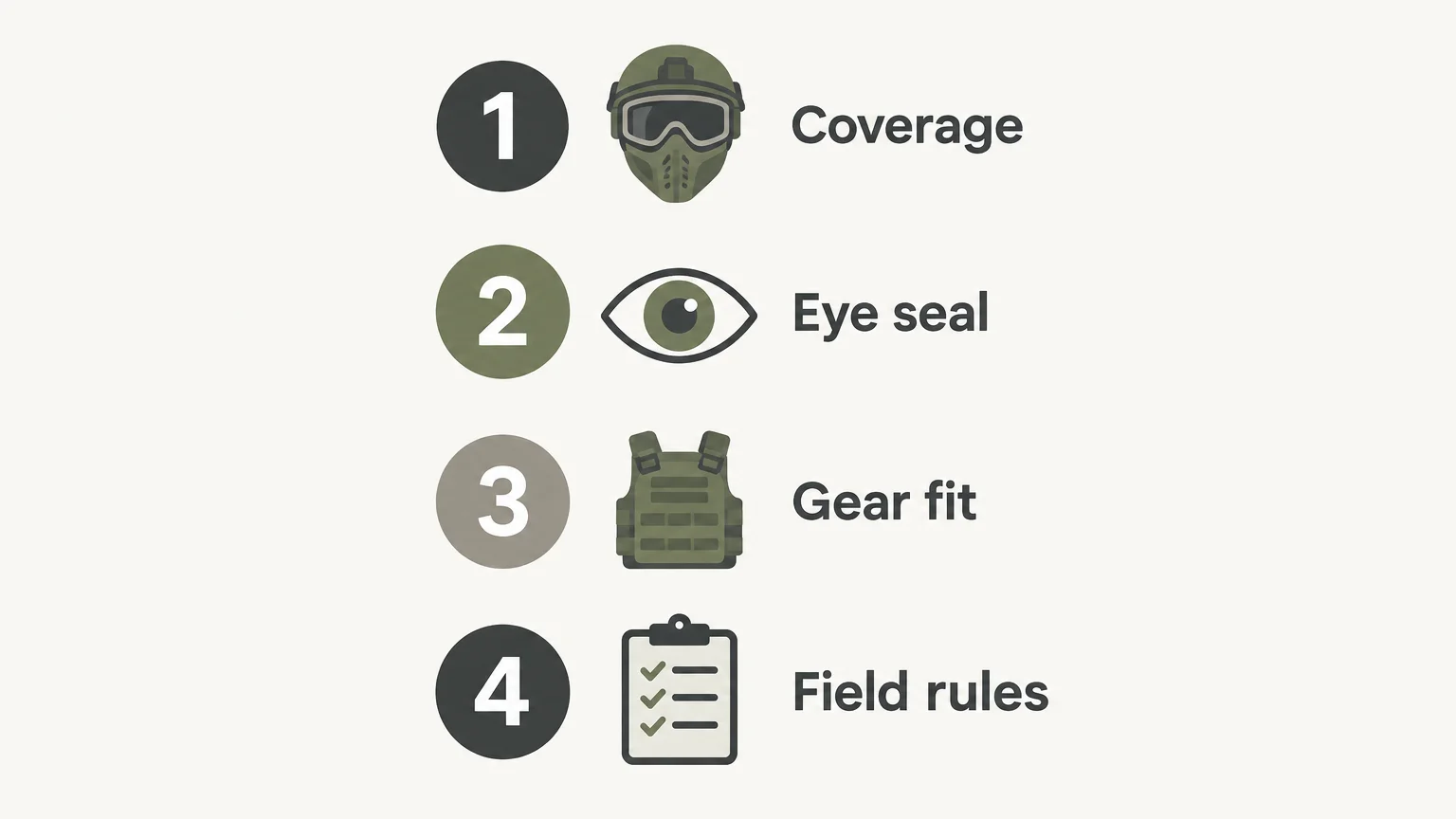
Before buying, make a short checklist: confirm the coverage you want, verify your eyewear separately, test the fit with your other gear, and check your field’s rules. If you need help choosing equipment, our Canadian team provides product guidance and technical assistance for airsoft players.
Choose a mask that works with your whole setup
The best choice is the one that covers the areas you want protected, fits securely alongside your goggles, and does not obstruct aiming or communication. Treat airsoft face protection and eye protection as separate checks, then confirm the complete setup meets your field’s requirements before you play.
Explore Airsoft Face Protection
Choosing a mask involves more than selecting a coverage style. You also need to consider fit, eye protection, and how the equipment works together. As a Canadian-owned retailer serving Canadian players, we offer product guidance and a range of tactical gear for your airsoft setup.
Browse our airsoft face protection selection, then check the product details and your field’s requirements before choosing. If you are unsure how a face guard will work with your existing goggles or other equipment, contact our team for product guidance.
Frequently Asked Questions
Does a tactical mask replace airsoft goggles?
No. A lower-face mask does not protect your eyes, and a mask with mesh over the eyes should not be treated as a substitute for suitable eyewear. Check that your goggles are appropriate for airsoft and accepted by your field.
Is a mesh airsoft face mask a good choice?
Mesh can provide an open, ventilated design for lower-face coverage. Check the mask’s stated coverage and protective information, and wear suitable eye protection separately.
How should a mask fit with goggles?
Your mask should sit securely without pushing your goggles out of position or disrupting their seal. Test both items together with your helmet or headwear before playing.
Can I wear a helmet-style mask without goggles?
Do not assume the helmet or mask provides adequate eye protection. Check the product’s specifications and wear suitable eyewear that meets your field’s requirements.
What does CQC Airsoft offer for face protection?
We carry face protection and related tactical gear for Canadian airsoft players. Our team can also provide product guidance if you need help considering fit with your existing equipment.
