
Airsoft Guns
The Ultimate Guide to Airsoft Guns in Canada
Sep
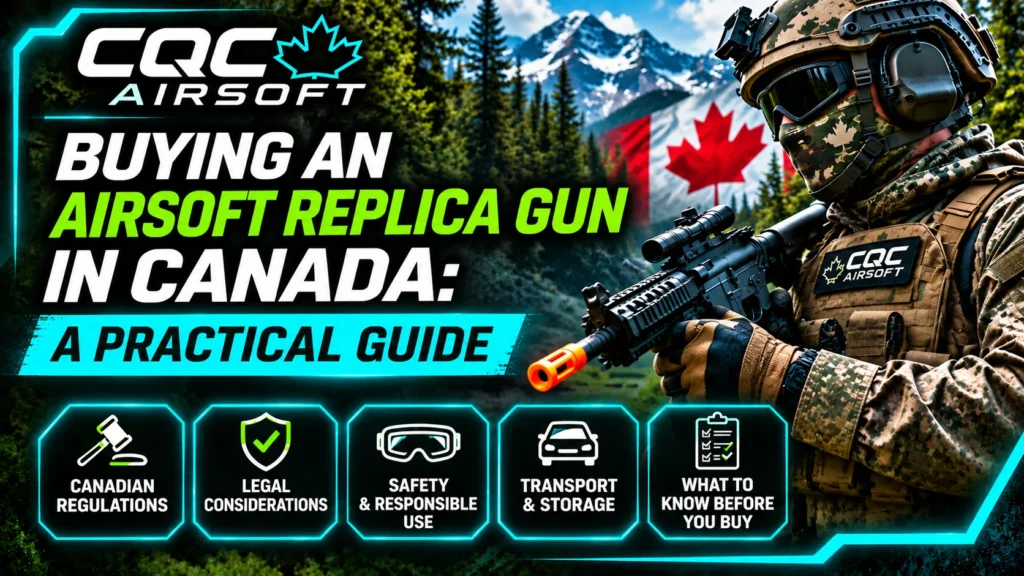
Understanding airsoft in Canada starts with safety, legal awareness, and responsible participation. Whether you are learning about the sport for the first time or researching Canadian regulations, it is important to understand how airsoft equipment is classified and what precautions apply.
This CQC Airsoft Learning Centre guide explains the recreational activity, Canadian legal considerations, protective equipment, organized events, and common questions about responsible ownership.
What Is Airsoft?
Airsoft is a recreational activity involving equipment that typically launches lightweight plastic projectiles. Organized events may involve teams, referees, designated playing areas, and specific safety rules.
Because some airsoft equipment closely resembles real firearms, responsible handling and transportation are essential. Realistic appearance does not mean that an item is harmless or exempt from Canadian law.
Understanding Airsoft Laws in Canada
Canadian law distinguishes between different types of air-powered devices and replica firearms. Classification depends on several factors, including projectile performance, design, and resemblance to regulated firearms.
There is no single FPS rule that determines every legal question about an airsoft device. The Canadian Border Services Agency explains how muzzle velocity, energy, and physical characteristics affect classification.
For authoritative information, review the CBSA guidance on firearms, weapons, and replica devices.
Why Classification Matters
Different legal categories can involve different restrictions. Importation, possession, transportation, and use should not be treated as identical legal questions.
Provincial, municipal, and venue-specific rules may also apply. Always verify current requirements with the appropriate authorities.
Importation and Border Requirements
Equipment brought into Canada may be subject to inspection and classification. A product being available in another country does not automatically establish that it can legally enter Canada.
The CBSA’s Canadian border requirements provide further information about firearms and related devices.
Airsoft and Conventional Air Guns: Key Differences
Although the terms are sometimes used interchangeably, airsoft equipment and conventional pellet or BB air guns are not necessarily the same.
Airsoft equipment commonly uses lightweight plastic projectiles in organized recreational activities. Conventional air guns may use metal pellets or BBs and may be designed for different purposes.
Both categories can present serious safety risks. Their legal classification depends on the characteristics of the specific device rather than its marketing description alone.
Airsoft Communities Across Canada
Organized airsoft activities can be found in different regions of Canada, including British Columbia, Ontario, and Quebec. Event formats, venue policies, age requirements, and safety procedures may vary.
Airsoft in Toronto and Ontario
People researching airsoft in Toronto should consult current local bylaws and the policies of organized recreational venues. Requirements may differ between municipalities and facilities.
Airsoft in Vancouver and British Columbia
In British Columbia, responsible participation also requires attention to local regulations, transportation rules, and venue-specific safety requirements.
Public spaces should never be assumed to be suitable locations for airsoft activities.
Essential Airsoft Safety Principles
Protective Eye and Face Equipment
Eye injuries are a significant concern in projectile-based recreational activities. Participants should use protective equipment specifically approved by the venue and suitable for the activity.
General information about eye and face protection is available from Health Canada.
Respect Venue Rules
Organized venues may establish safety briefings, protective-equipment requirements, participant eligibility rules, and procedures for reporting unsafe conditions.
Participants should understand these requirements before attending an event.
Responsible Transportation and Storage
Realistic-looking equipment can cause public concern if displayed outside an appropriate setting. Follow applicable laws, keep equipment secured during transportation, and avoid displaying it in public.
Supervision and Age Requirements
Age restrictions and supervision requirements can vary by venue and jurisdiction. Younger participants should involve a parent or guardian and follow the venue’s eligibility and safety policies.
Why Responsible Airsoft Education Matters
Learning about legal requirements and safety expectations helps participants make informed decisions and understand their responsibilities.
Educational resources should distinguish between general recreational information, manufacturer claims, venue rules, and legal requirements.
Because regulations and policies can change, current government publications should take priority over older articles or informal online discussions.
Continue Learning with CQC Airsoft
Understanding airsoft in Canada involves learning about safety, organized activities, equipment care, and responsible participation. The CQC Airsoft Learning Centre offers additional educational resources.
Getting Started with Airsoft
New to the activity? Explore our Airsoft Beginner Guides to learn about organized events, field rules, and safety expectations.
Eye and Face Protection
Protective equipment is an essential part of responsible participation. Read our Airsoft Eye and Face Protection Guide for information about protective coverage and fit.
Understanding Equipment Maintenance
Learn why regular inspections and responsible storage matter in our Beginner Equipment Maintenance Guide.
Recognizing Maintenance Warning Signs
Unusual noises, excessive heat, or visible damage can indicate a problem. Our 10 Signs Your AEG Needs Maintenance article explains common warning signs.
Explore the Learning Centre
Visit the CQC Airsoft Tech Corner for more educational articles and equipment safety information.
Frequently Asked Questions About Airsoft in Canada
Is airsoft legal in Canada?
Some airsoft equipment is lawful in Canada, but classification and restrictions depend on the particular device and circumstances. Consult current Canadian legislation and official guidance.
Are airsoft guns considered toys?
Not necessarily. Some airsoft devices may meet legal definitions relating to firearms or replica firearms. Marketing terminology does not determine legal classification.
Are airsoft and pellet guns the same?
No. They may use different projectiles and have different intended purposes. Both require appropriate safety precautions.
Can airsoft equipment cause injuries?
Yes. Projectiles can cause injuries, particularly to unprotected eyes. Appropriate protective equipment and supervised, rule-based environments are important.
Can airsoft be played in public parks?
Do not assume public parks permit airsoft activities. Municipal bylaws, property rules, and other legal restrictions may prohibit them.
Do all Canadian airsoft venues have the same rules?
No. Venue requirements can differ regarding participant age, supervision, protective equipment, and event conduct.
Where can I find current Canadian legal information?
Consult official federal and provincial resources, including the Canada Border Services Agency, and verify relevant municipal requirements.
Final Thoughts: Understanding Airsoft in Canada
Airsoft is a recreational activity that requires more than an understanding of equipment. Canadian regulations, protective gear, venue policies, responsible transportation, and respectful conduct all matter.
The CQC Airsoft Learning Centre encourages readers to rely on current official guidance, follow organized venue rules, and prioritize safety.
