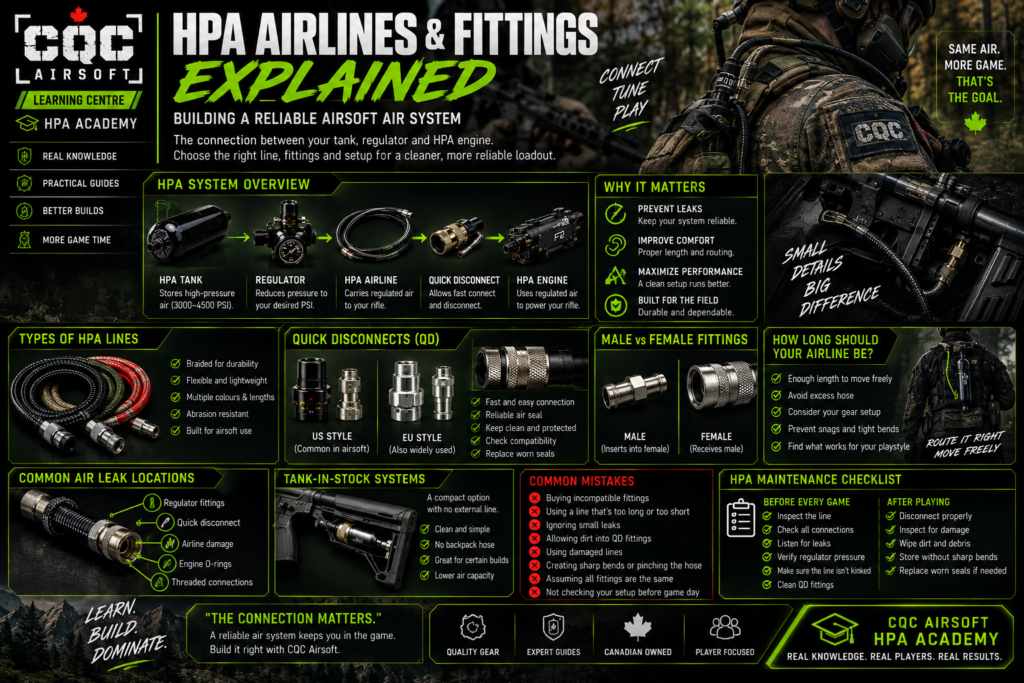
You can have a premium HPA engine, a quality regulator, and a fully charged air tank—but there’s still one component connecting everything together: Your HPA airline. The airline carries regulated air from your tank and regulator to the HPA engine inside your airsoft rifle. Along the way, fittings and quick-disconnect connectors allow the system to […]
Category Archives: HPA Academy
Master the world of HPA airsoft with the CQC Airsoft HPA Academy. Explore beginner-friendly guides, setup tutorials, regulator tuning, maintenance tips, troubleshooting, and expert advice on HPA rifles, tanks, regulators, and accessories. Whether you’re new to HPA or looking to fine-tune your setup, CQC Airsoft has the knowledge to help you get the most from your HPA system.
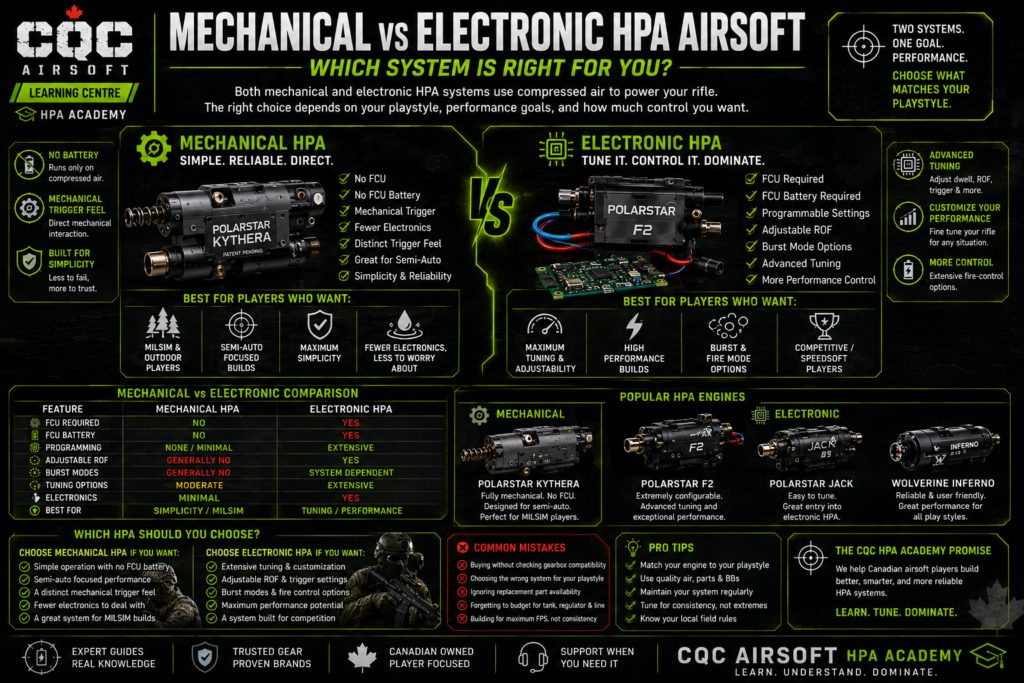
Choose mechanical HPA if battery-free engine operation and a mechanical trigger suit your needs. Choose electronic HPA if you want the programmable controls offered by a compatible engine and controller. Neither approach guarantees a more accurate or reliable rifle. This CQC Airsoft HPA Academy guide compares the practical differences so you can plan around compatibility, […]
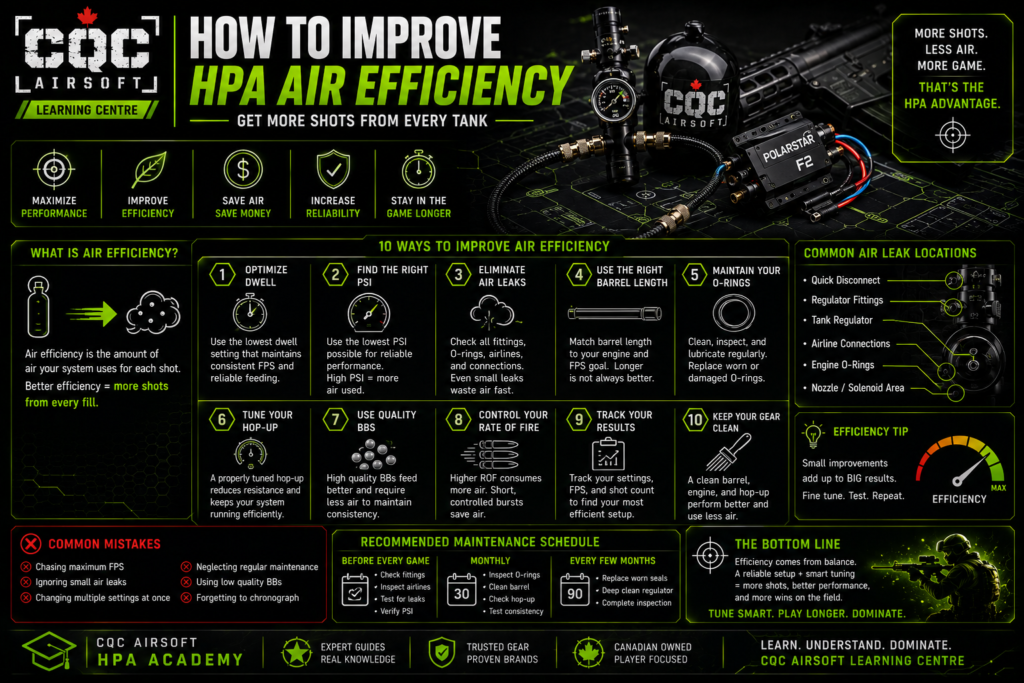
One of the biggest advantages of an HPA system is consistency, but efficiency is just as important. Nobody wants to walk back to the refill station halfway through the day because their tank is empty. Whether you’re running a PolarStar F2, Wolverine INFERNO, Kythera, or another HPA engine, improving efficiency allows you to fire more […]
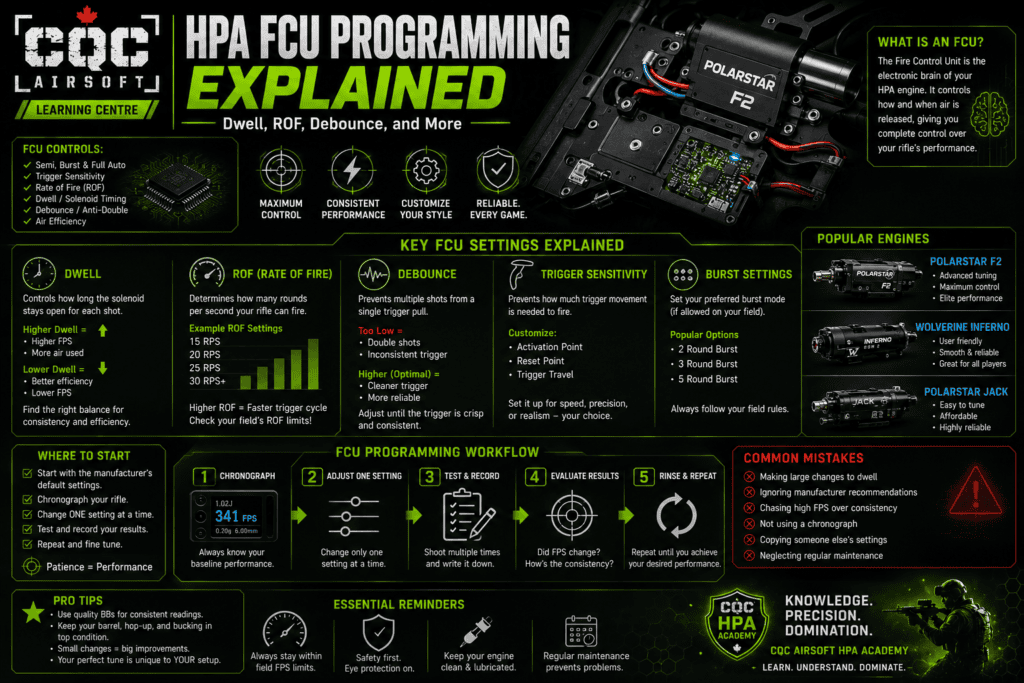
An HPA Fire Control Unit (FCU) controls electronic firing functions, but its available settings depend on the controller, firmware and engine. Learn what each setting does before changing it, and use the instructions for your exact equipment. This CQC Airsoft HPA Academy guide explains dwell, rate of fire, debounce and trigger controls. It is a […]
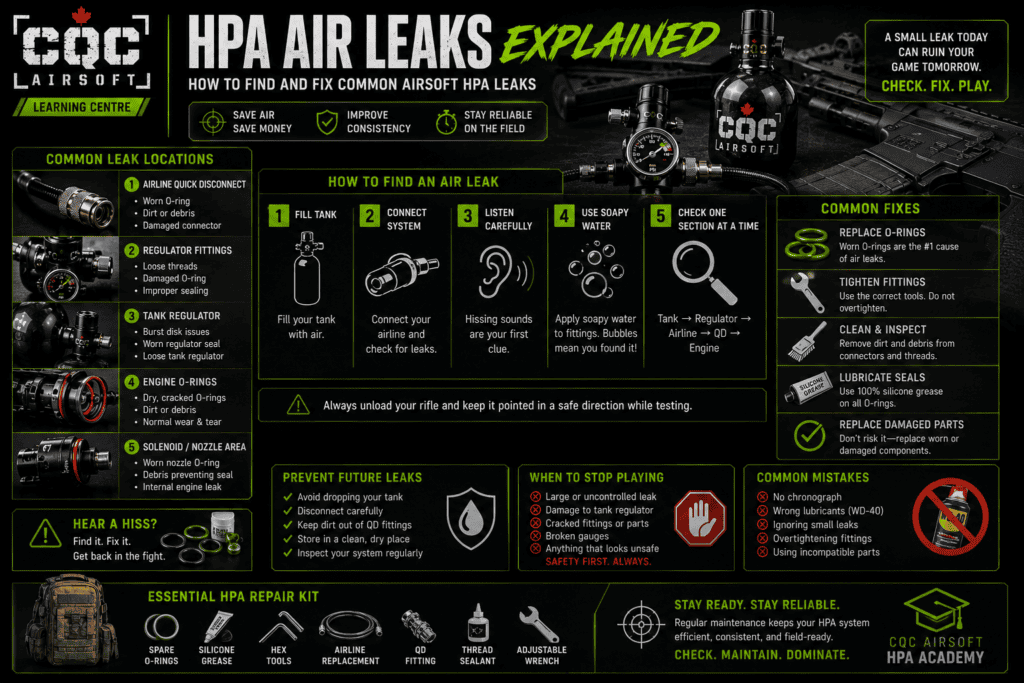
If your HPA system starts hissing, stop play and identify which component needs attention before using it again. Some leaks involve a replaceable seal or connector. Others require service by a technician qualified to work on compressed-air equipment. This CQC Airsoft HPA Academy guide explains common leak locations and how to approach diagnosis without treating […]
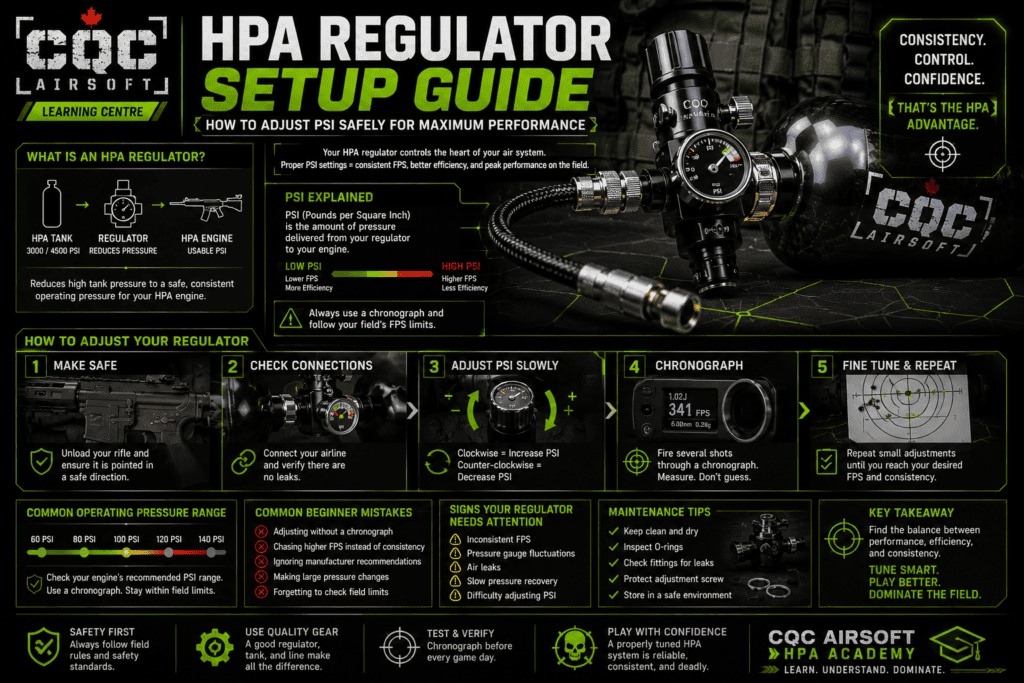
There is no universal PSI setting or adjustment sequence for every HPA rifle. Use the instructions for your exact tank, regulator and engine, then verify the completed setup through your field’s chronograph procedure. This CQC Airsoft HPA Academy guide explains the pressure terms, compatibility checks and testing habits that help you understand regulator setup. Tank […]
Plan your first HPA conversion around the rifle you own, the controls you want and the equipment needed to supply air. Start with compatibility, then compare engines and budget for the complete setup. This CQC Airsoft HPA Academy guide walks through that planning process, including electronic and mechanical engines, air supply, installation and the choice […]
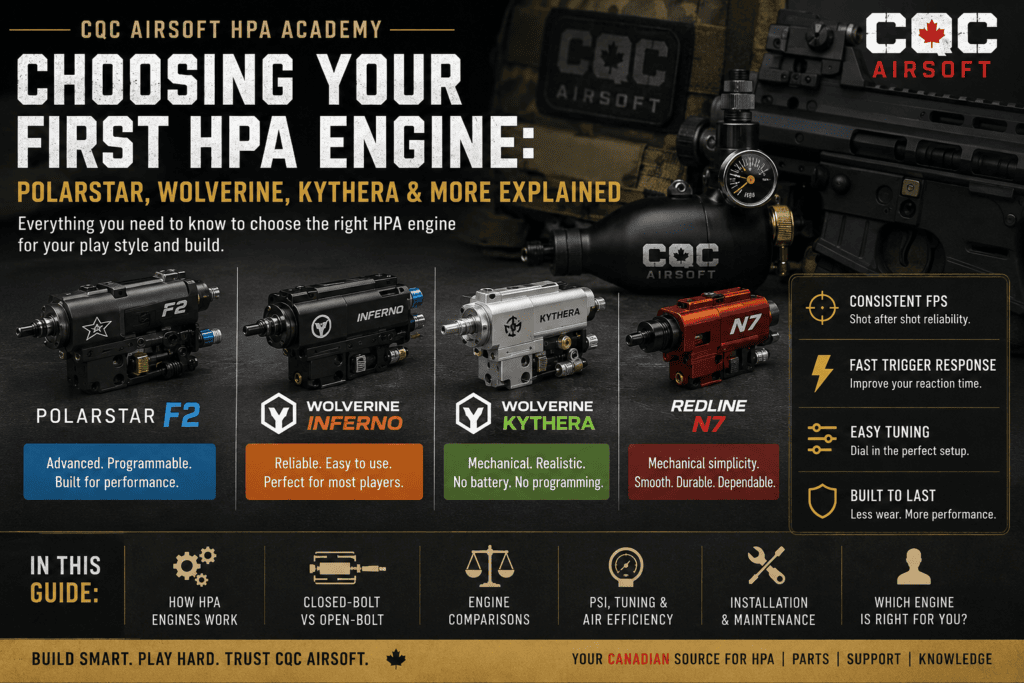
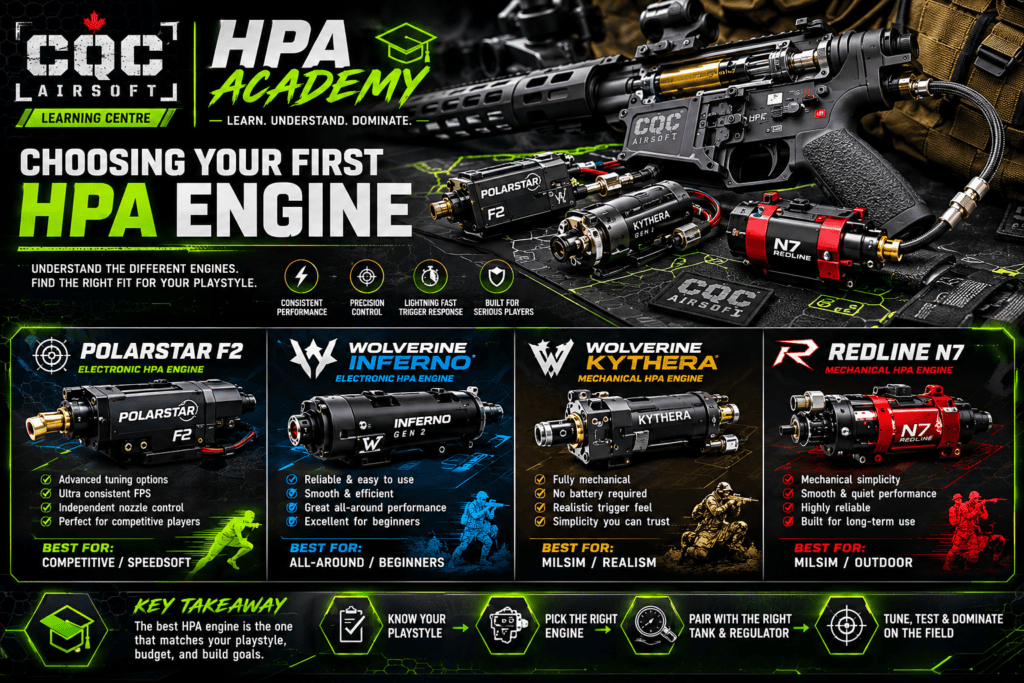
Choose your first HPA engine by checking rifle compatibility, firing controls and the cost of the complete air system. The most expensive engine is not automatically the best fit for your first build. PolarStar F2, Wolverine INFERNO and PolarStar Kythera offer different approaches to air-powered operation. Redline N7 buyers also need to identify the exact […]
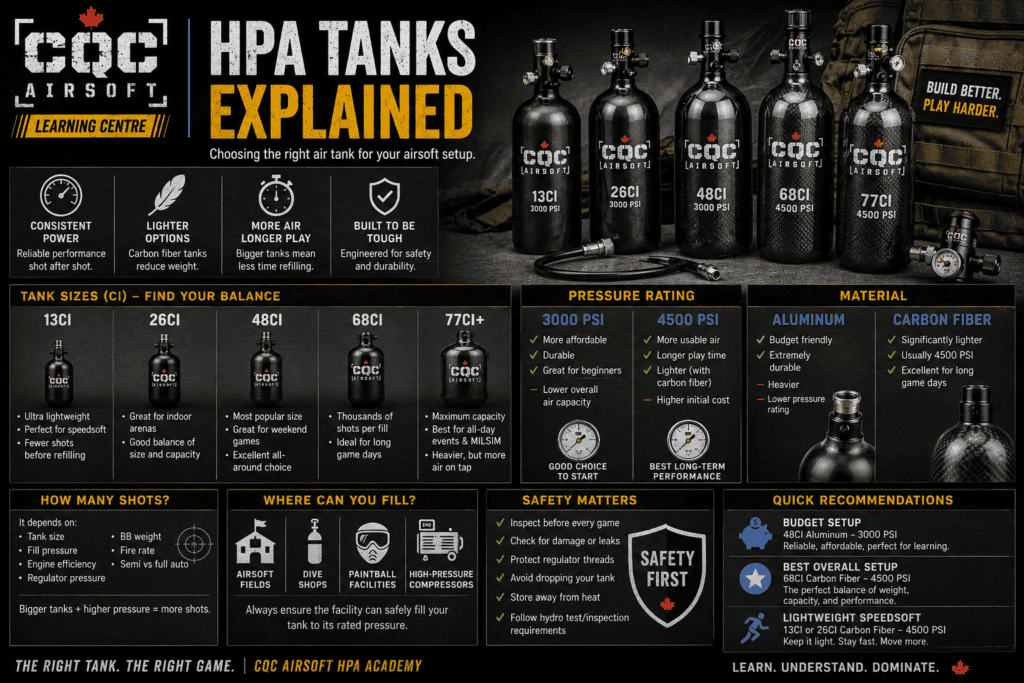
Choose an HPA tank by comparing capacity, pressure rating, regulator compatibility and the weight of the complete setup. Before buying, confirm where you can obtain suitable fills and how you will carry the tank. This CQC Airsoft HPA Academy guide explains the specifications without promising a fixed shot count or naming one tank size as […]
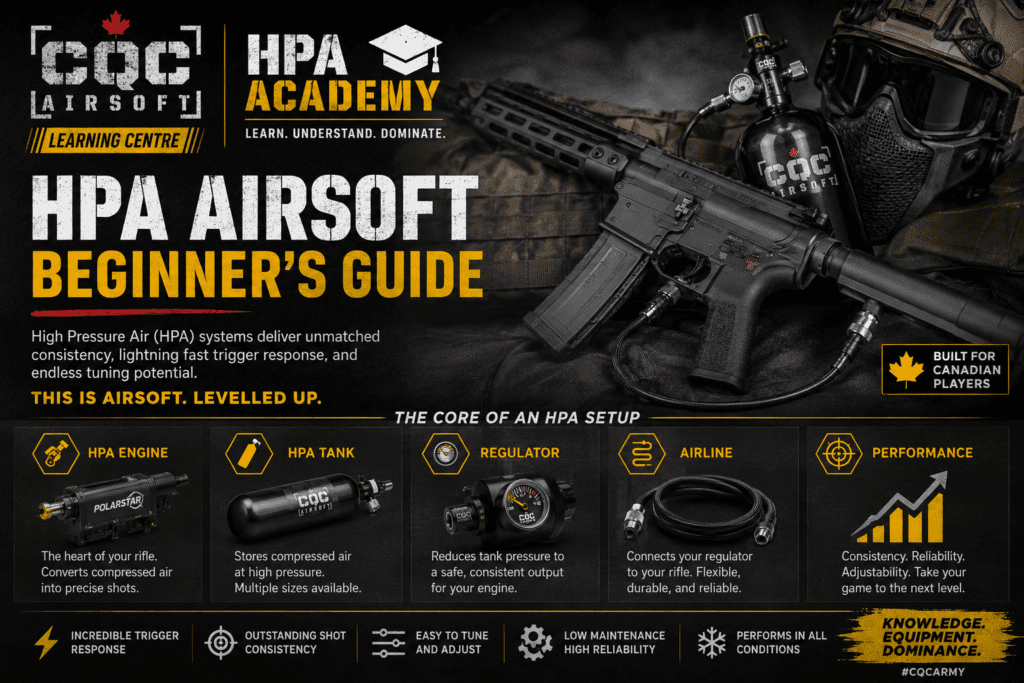
HPA stands for High Pressure Air. An HPA airsoft setup uses regulated compressed air to propel BBs. It can offer responsive operation and adjustable controls, but it also needs compatible air equipment, maintenance and access to refills. This beginner’s guide from the CQC Airsoft HPA Academy explains the main parts, practical trade-offs and questions to […]
- 1
- 2